

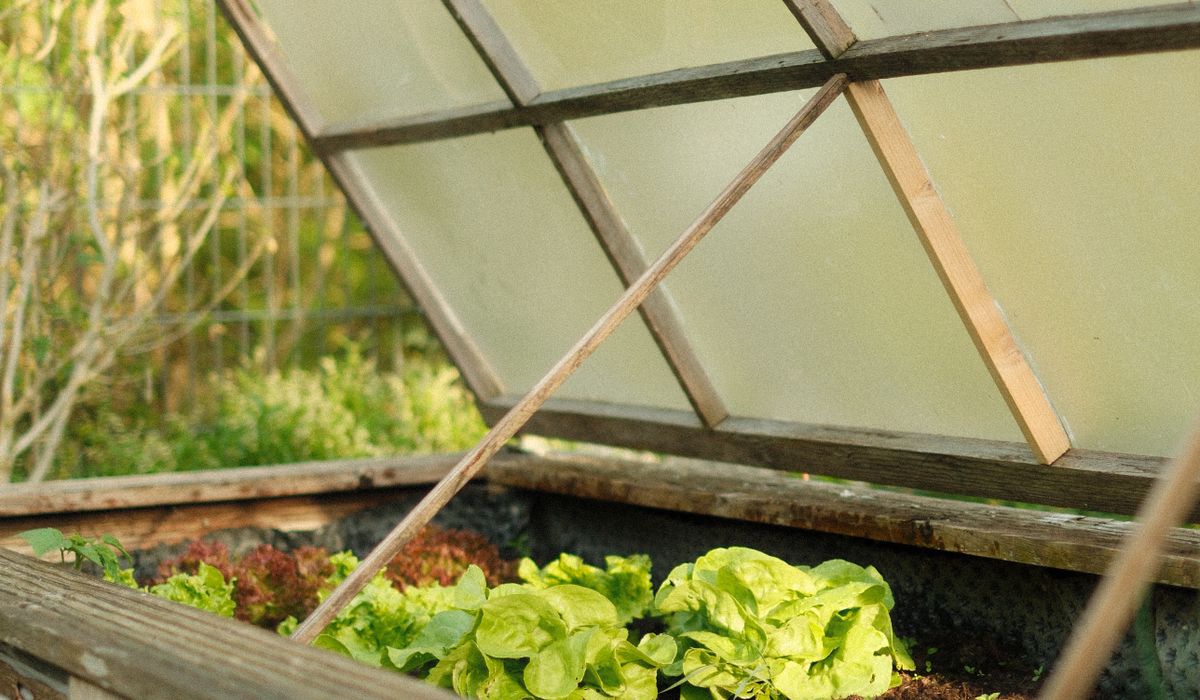
Using a Cold Frame to Overwinter Hardy Herbs
Why pots make a British winter so hard on herbs
Thyme, sage and mint are rugged plants. Left in the ground, most of them sail through a UK winter without a word of complaint. Put the same plant in a pot, though, and the rules change. Compost in a container freezes solid and thaws again, over and over, heaving the roots about. Heavy rain soaks the pot from above and the drainage holes struggle to keep up, so the compost sits saturated for weeks. And the wind — the part most gardeners overlook — strips moisture from evergreen leaves while the roots below are too cold to replace it. A plant can be bone dry and frozen at the same time.
Mediterranean herbs such as thyme and sage are adapted to dry, gritty, sun-baked hillsides. What kills them here is not cold but wet, and specifically wet around the crown, where rot sets in quietly between November and February.
What a cold frame actually does
It is worth being clear about this: a cold frame is not a greenhouse. It will not keep your herbs warm. What it does is act as a windbreak with a roof. The glazing sheds the worst of the winter rain, keeps foliage dry, and buffers the temperature so that pots do not freeze and thaw quite so violently.
Sited against a south-facing wall, a frame gains a little radiated warmth from the masonry too. On a bright February afternoon the air inside can be ten degrees warmer than outside — a genuine advantage. But that cuts both ways. Left shut on a sunny day, even in midwinter, a frame can overheat and cook the plants inside. Ventilation is as important as shelter, and the two together are the whole art of using one.
Which herbs earn a place in the frame
- Thyme — the strongest candidate. It hates wet roots and rots at the crown with grim reliability in a wet winter. In a frame, on gritty compost, it comes through far better.
- Sage — perfectly hardy, but it sulks in saturated compost. Purple and variegated forms are less robust than plain green, so give them the sheltered spot first.
- Mint — the roots are tough as old boots, but a pot of mint frozen solid and thawed repeatedly can kill the lot. A frame keeps the compost on a more even keel. Expect the tops to die back; that is normal, not a death sentence.
- Rosemary, oregano, winter savory and bay — all worth a place if you have room. Pot-grown rosemary is more secure in a frame than against a wall, and bay in a container appreciates the protection in colder parts of the country.
- Basil, coriander and dill — no. These are tender or annual, and a cold frame will not save them. Sow fresh next spring.
Getting the pots ready in autumn
Late August to mid-September is the window. Work through this list and you will save yourself a good deal of grief in January.
- Trim lightly, taking only soft growth. Never cut back into old, bare wood on thyme and sage — they rarely reshoot from it.
- Stop feeding at the end of August. Late feeding pushes soft growth that the first hard frost will blacken.
- Check the drainage holes are clear and free-running. Raise pots on feet, slats or bricks so they never stand in a puddle.
- Top-dress with a one-centimetre layer of horticultural grit. It keeps the crown dry and makes life harder for slugs.
- Clear fallen leaves and weeds from the surface, which otherwise harbour slugs and mould.
- Terracotta breathes well but can crack in a hard frost; plastic is safer but holds more water. Either will do — drainage matters more than the material.
Setting up, and the winter routine
Put the frame somewhere sunny and sheltered, ideally against a south or west wall, standing on slabs or gravel rather than bare soil. Line the floor with a layer of gravel and stand pots on a slatted base or bricks so air can move underneath. Do not cram them in. Air circulation between pots is what keeps botrytis at bay, so leave gaps and put the tallest plants at the back.
Then settle into a rhythm. Open the lid on any mild, still day, even in January — an hour or two in the middle of the morning is plenty, and longer on a bright February day. Close it well before dusk so you are not trapping cold damp air overnight. Water very sparingly, only when the compost is genuinely dry a couple of centimetres down, and always in the morning. Every three or four weeks is often enough; overwatering in winter does far more damage than drought. Brush heavy snow off the lid so the weight does not crack the glazing, though a light dusting insulates rather than harms.
Troubles to watch for, and bringing them back in spring
Have a look every week or so. Grey, fuzzy mould on sage or mint means you need more ventilation and fewer dead leaves lying about. Slugs and vine weevil grubs will happily overwinter in pots, and mice sometimes nest in a frame full of dry compost, so check the gaps.
From March, begin hardening the plants off by leaving the lid open all day and shutting it only at night. Repot in April into fresh peat-free compost, and move the pots outside once the risk of hard frost has passed — usually mid-May in the south, a few weeks later in the north. Water well after repotting and pinch out the tips of thyme and mint to encourage bushy growth.
Do that, and you will be cutting your own thyme in April while the garden centre queues are still forming.


Greenhouses
-
Add well-rotted manure, garden compost and grit over several seasons to break down heavy clay and improve drainage.


Cold Frames



-

Long established fact that a reader will be distracted
-

Long established fact that a reader will be distracted
-

Long established fact that a reader will be distracted



Polytunnels
Karla Gleichauf
12 May 2017 at 05:28 pm
On the other hand, we denounce with righteous indignation and dislike men who are so beguiled and demoralized by the charms of pleasure of the moment
M Shyamalan
12 May 2017 at 05:28 pm
On the other hand, we denounce with righteous indignation and dislike men who are so beguiled and demoralized by the charms of pleasure of the moment
Liz Montano
12 May 2017 at 05:28 pm
On the other hand, we denounce with righteous indignation and dislike men who are so beguiled and demoralized by the charms of pleasure of the moment