

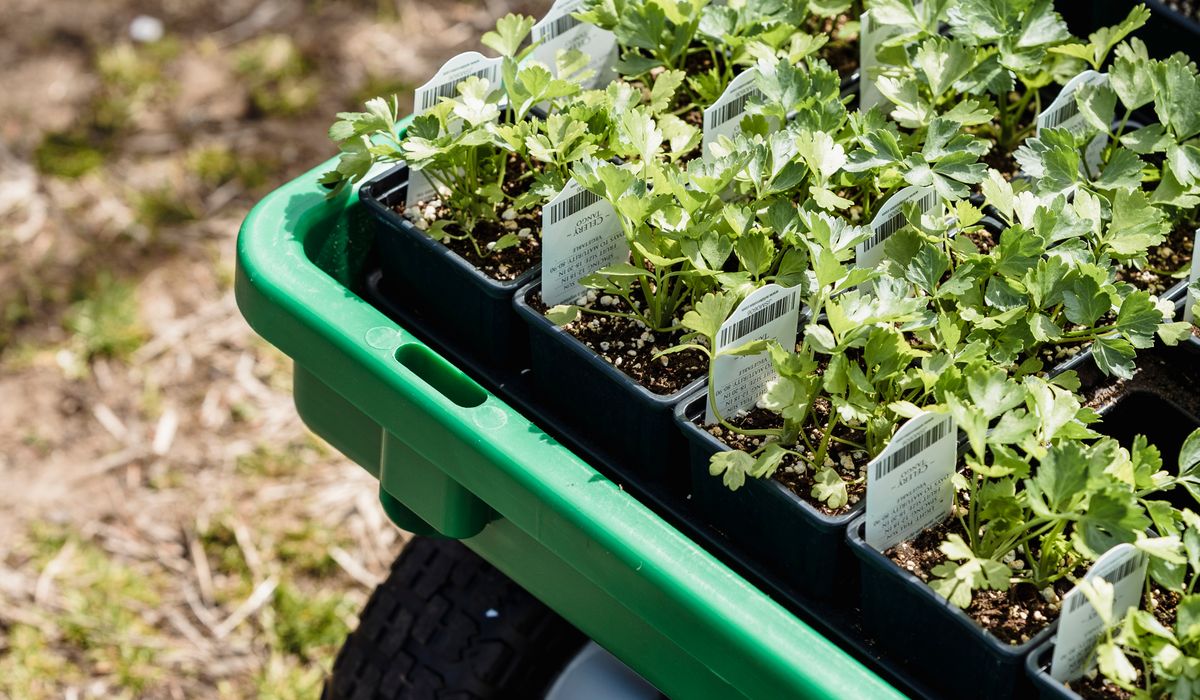
Choosing Seeds for a Cold Frame in Spring
Why a cold frame earns its keep in spring
A cold frame is little more than a bottomless box with a translucent lid, but in a British spring it is one of the hardest-working bits of kit in the garden. It lifts the ambient temperature by a few degrees, keeps driving rain and late frost off tender leaves, and shelters seedlings from the wind that would otherwise snap them at soil level. Most importantly, it is the halfway house between a warm windowsill and the open ground — the place where young plants are hardened off before they face the weather for real.
Site yours in full sun, ideally facing south or west, and somewhere you can lift the lid without trampling the bed behind it. If you can, sink the frame a few centimetres into the soil; the earth insulates the sides, draughts are kept out, and you gain a little extra height for taller seedlings. A maximum–minimum thermometer left inside will tell you far more than guesswork ever will.
Three groups of seed worth sowing early
Not everything benefits from an early start under cover. These three groups do, reliably, year after year.
- Hardy annuals — calendula, cornflower, nigella, orlaya, ammi and sweet peas. Sown in February and early March they build strong roots before planting out in May, and they flower weeks ahead of a direct-sown row. Sweet peas in particular want deep modules and a pinch out at the growing tip once two pairs of true leaves appear.
- Early carrots — 'Early Nantes', 'Chantenay Red Cored' and 'Paris Market Atlas' all crop well from a protected start. Carrots resent root disturbance, so use deep, narrow modules or root trainers and sow two or three seeds per cell, thinning to the strongest.
- Salad leaves — rocket, mizuna, 'Winter Density' lettuce, 'Little Gem' and spinach 'Medania'. These are cut-and-come-again crops, so sow small pinches rather than whole rows and you will eat from April onwards.
Sowing into modules: the practical detail
Module sowing is not fussy, but a few habits make the difference between sturdy plants and a tray of leggy disappointment.
- Use fresh, peat-free multipurpose compost, firmed gently but never compressed. Old compost from last year carries damping-off fungi and often drains poorly.
- Choose module size to suit the crop: 24-cell trays for lettuce and annuals, deeper cells for carrots and sweet peas.
- Sow at roughly twice the seed's diameter. A light dusting of vermiculite over the top keeps moisture in and light levels up.
- Water from above with a fine rose, or stand the tray in a shallow bath until the surface darkens, then drain thoroughly. Soggy modules rot seeds faster than cold does.
- Label everything, including the date. It is astonishing how quickly February's trays become anonymous.
Germinate on a bright windowsill or in a cool greenhouse at around 15–18°C. Once the first true leaves appear, move the trays straight into the cold frame — the drop in temperature is what stops them stretching.
Hardening off without the heartbreak
Hardening off is a gradual process, not an event. Give it seven to ten days. Open the frame lid a little wider each morning until, by the end of the week, it is fully open all day. Close it again in the late afternoon while nights are still cold, and throw a layer of horticultural fleece over the top if a frost is forecast. By day ten the plants should be standing without a lid at all, ready for planting out.
Watch the sun. A closed frame on a bright March day can hit 30°C by noon and cook everything inside, so if you are out at work, prop the lid open a hand's width before you leave. Automatic vent openers are worth every penny for exactly this reason.
Pests, damping off and the odd cold snap
Slugs are the cold frame's chief tenant, hiding under the rims and in the damp corners. Check the inner edges each morning and clear any stragglers before they find your lettuce. Damping off — seedlings collapsing at the base — is almost always a sign of overwatering, poor airflow or sowing too thickly; improve all three rather than reaching for a spray. Mice will happily dig out sweet pea seeds, so sow a few extra and cover trays with a sheet of glass or mesh until germination. Finally, keep fleece and bubble wrap to hand until late May. A single sharp frost can undo a fortnight of patient hardening off, and covering up for one night costs nothing.
Succession sowing keeps the frame full
The real skill with a cold frame is rotation. As soon as one tray of salad leaves is planted out, refill the cells with the next pinch of seed. Sow a short row of carrots every three weeks from March to June for a steady supply rather than a single glut. Follow the hardy annuals with a second batch in April for late-summer colour, and use the frame's sheltered warmth to raise brassicas and chard for summer planting.
Sow little, sow often, and keep the lid moving with the weather. Do that, and your cold frame will earn its place in the garden many times over before the season is out.


Greenhouses
-
Link guttering from a shed roof to a water butt, then use a soaker hose along raised beds during dry spells.


Cold Frames


-

Long established fact that a reader will be distracted
-

Long established fact that a reader will be distracted
-

Long established fact that a reader will be distracted



Polytunnels
Karla Gleichauf
12 May 2017 at 05:28 pm
On the other hand, we denounce with righteous indignation and dislike men who are so beguiled and demoralized by the charms of pleasure of the moment
M Shyamalan
12 May 2017 at 05:28 pm
On the other hand, we denounce with righteous indignation and dislike men who are so beguiled and demoralized by the charms of pleasure of the moment
Liz Montano
12 May 2017 at 05:28 pm
On the other hand, we denounce with righteous indignation and dislike men who are so beguiled and demoralized by the charms of pleasure of the moment